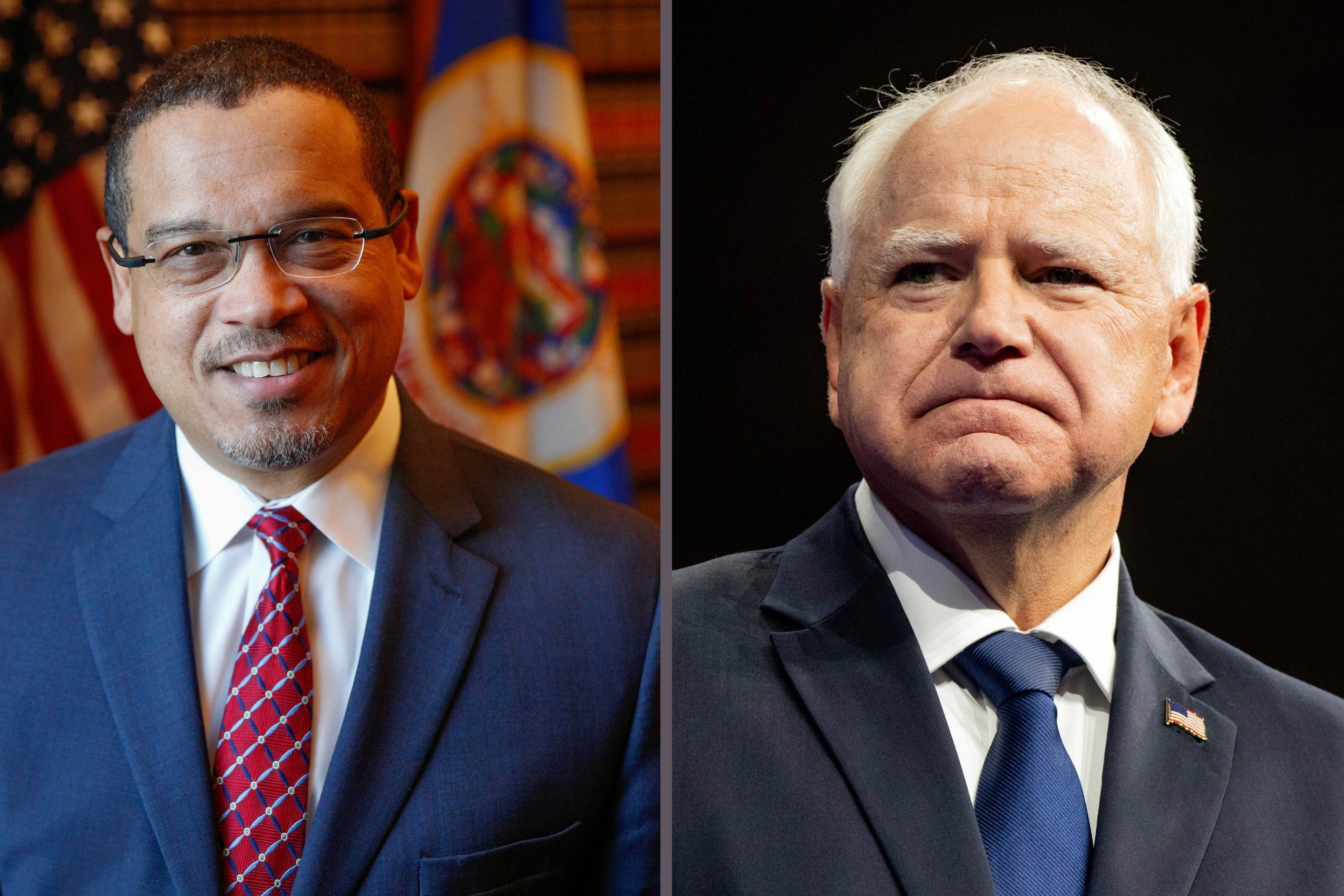
A Republican-led effort to launch impeachment investigations into Gov. Tim Walz and Attorney General Keith Ellison stalled Wednesday after the Minnesota House Rules and Legislative Administration Committee deadlocked on an 8-8 vote.
The tie vote meant Resolution 13A — which would have referred impeachment-related allegations to the House Committee on Fraud Prevention and State Agency Oversight Policy for formal investigation — did not advance.
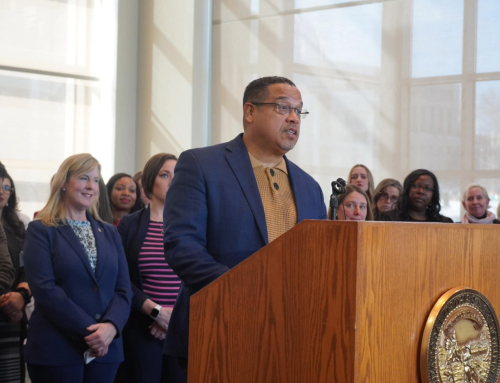
The hearing centered on House resolutions seeking the impeachment of Walz and Ellison, with Republicans arguing that Minnesota’s massive fraud scandals — including the Feeding Our Future case — warrant further legislative scrutiny of what Walz and Ellison knew, and when they knew it.
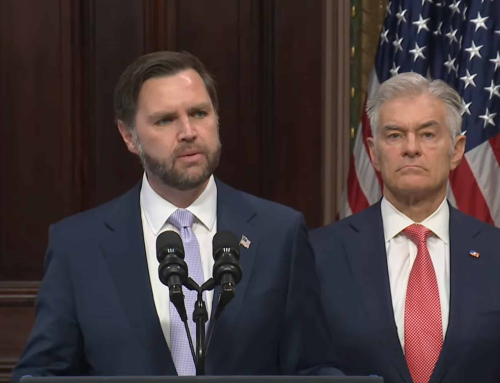
🚨WATCH: A Minnesota House committee discussed impeachment resolutions today against Gov. Tim Walz and Attorney General Keith Ellison.
“It has the clear appearance of corrupt conduct in office. The state’s top law enforcement sided with people tied to an active fraud probe… pic.twitter.com/DOTegX4PWI
— Alpha News (@AlphaNews) April 15, 2026
Committee Chair Harry Niska, R-Ramsey, said the public is “rightfully demanding answers” after “billions of dollars” in taxpayer money were lost in overlapping fraud schemes.
“This is an important legal process,” Niska said during the hearing. “It is not a process for partisan politics, and so it must be treated with the utmost seriousness.”
Republican lawmakers backing the resolutions argued that the Legislature has a constitutional responsibility to pursue accountability when executive officers may have failed in their duties.
Democrats forcefully pushed back, characterizing the hearing as politically motivated. DFL lawmakers repeatedly described the proceedings as a distraction from legislative priorities, including affordability, health care, and public safety.
Rep. Jamie Long, DFL-Minneapolis, called the hearing “an embarrassment to the institution” and said Republicans wanted to turn committee time into “essentially a GOP campaign arm for the rest of session.”
Federal accountability debate illustrates partisan divide
Several Democrats argued that Republicans were selectively invoking accountability and repeatedly shifted the discussion from the billions of dollars lost to fraud under Walz’s and Ellison’s watch to President Donald Trump.
Rep. Sydney Jordan, DFL-Minneapolis, argued that the hearing was ignoring more serious issues.
“This is another just simple, stupid distraction,” Jordan said, accusing Republicans of focusing on “petty grievances” instead of issues like millennial homeownership rates and mass shootings — calling the GOP’s impeachment effort “performative outrage,” before throwing her pen and pivoting to the Trump administration.
“The federal government is just killing Minnesotans in Minneapolis for no reason,” Jordan said.
Rep. Erin Koegel, DFL-Fridley, said the impeachment push rang hollow unless Republicans were willing to apply the same standards to figures in Washington, referring to Trump.
“If we’re talking about holding our leaders accountable, I would pray that you guys would step up and say that what is happening at the federal level is also wrong,” Koegel said, adding that Democrats might take the effort “a little more seriously” if the same standards were applied more broadly.
The comment prompted a response from Rep. Jim Nash, R-Waconia, who argued that the Legislature’s authority is limited to state officials.
“We can’t impeach anybody in Washington,” Nash said. “The question remains, where does accountability begin here in the state of Minnesota?”
Niska echoed that argument in his closing remarks, saying lawmakers could only act on matters within the Legislature’s authority.
“We can’t do anything about what’s happening in Washington,” Niska said. “I certainly understand why Minnesota Democrats don’t want to talk about the policy issues and the policy problems that have been created by all Democrat-controlled government here in the state of Minnesota and want to talk about what’s going on with Donald Trump. But when we look at what we can control — what we can do to hold people accountable — this is what we can do.”
Whistleblower details retaliation and racism accusations
One of the most striking moments of the hearing came from Faye Bernstein, a current state employee who identified herself as a Democrat and a whistleblower, as she gave emotional testimony about what she described as years of retaliation after raising concerns about fraud inside state government.

Bernstein testified that after reporting what she viewed as risky contracts and oversight failures, leadership turned against her and launched what she called a “smear campaign.”
“I became a very unpopular person amongst leadership there,” Bernstein said. “The retaliation and the smear campaign is strong.”
Bernstein said she has been called everything from “incompetent” to “racist” in the workplace.
She told lawmakers that accusations of racism were among the first responses from leadership when employees raised fraud concerns.
“People who speak about fraud at state agencies, the first thing that leadership goes to is racism, and that is very hard to take,” Bernstein said. “It is humiliating, it is career killing. Obviously, who is going to hire someone who is considered racist?”
Bernstein also testified that she was involuntarily transferred out of her position after reporting concerns and said she was warned by an agency ethics officer that speaking before a legislative committee could cost her job.
Other testifiers urged accountability, with some warning of broader consequences if the allegations remain unaddressed.
The final vote ended in an even split, with eight Republicans voting yes and eight Democrats voting no, leaving the GOP’s quest for accountability dead in committee and without a clear path forward.

Jenna Gloeb
Jenna Gloeb is an Edward R. Murrow Award-winning journalist, media producer, public speaker, and screenwriter. Most recently, she worked as a reporter and on-air host for CCX Media. Jenna is a Minnesota native and resides in the Twin Cities with her husband, son, daughter, and two dogs.
Subscribe Below To Our Weekly Newsletter of our Latest Videos and Receive a Discount Code For A FREE eBook from our eBook store: