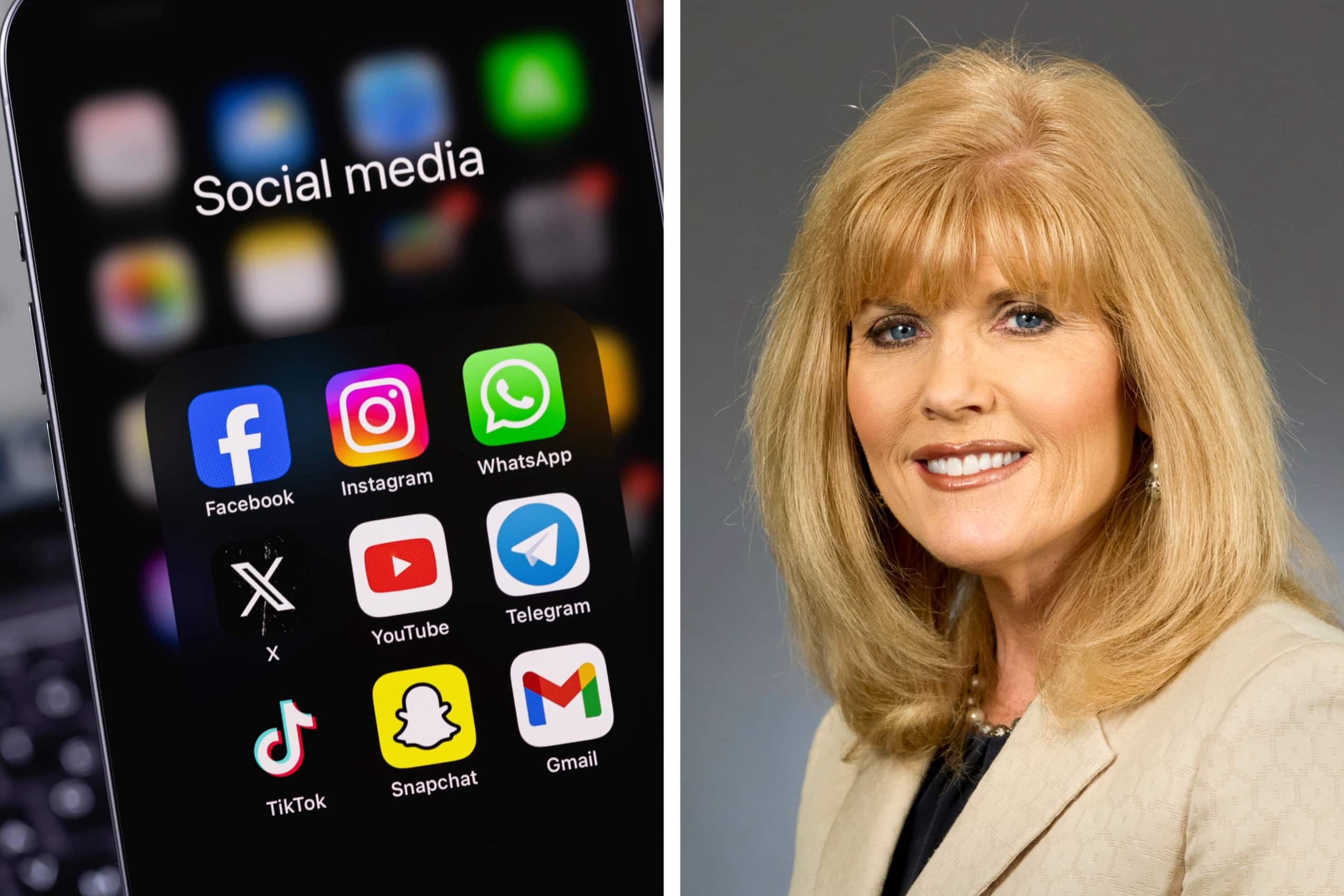
Lawmakers in the Minnesota House of Representatives advanced bipartisan legislation that would protect children from addictive social media features.
Under HF 4138, social media companies would be required to determine if their Minnesota users are 15 years of age or younger. If a user is younger than 15, those companies would be required to get verifiable consent from parents before allowing that user to continue.
Social media companies would determine their users’ age in two ways. The first way would be through the information a user inputs when they set up an account. The second method would be through targeted advertising technology.
In short, a social media company would be required to use its ad-targeting technology to determine if a user is younger than 15. If that technology found that a user was under 15, then the user would need to obtain verifiable parental consent.
HF 4138 would require social media companies to review accounts with the ad-targeting technology every six months.
Should a child be given verifiable parental consent to use the social media application, then the service would be significantly restricted. Among other things, child accounts would not have access to features such as infinite scrolling, auto-play videos, and reaction metrics.
Further, social media companies would not be allowed to present targeted ads to the child accounts, the child accounts’ default privacy settings would be as private as possible, and parents would be given the option to monitor application usage and set limits.
HF 4138 was heard Thursday in the House Commerce Committee. The bill is authored by GOP Rep. Peggy Scott. Co-authors of the bill include DFL Rep. Kristin Bahner, GOP Rep. Kristin Robbins, and DFL Rep. Steve Elkins.
Describing her bill, Scott told the committee that the purpose of HF 4138 “is to protect youth on social media,” and it “does not ban users from having social media. Instead, it requires a parent or guardian to approve of the social media contractual agreements.”
Scott explained that verifiable parental consent can involve phone calls, text messages, or an an emailed consent form. Scott said her legislation mandates that all information used for verifiable parental consent must be destroyed after its use.
Maggee Hangge of the Minnesota Catholic Conference spoke in support of HF 4138 during Thursday’s hearing, saying “this bill is really focused on eliminating the addictive-design model of social media products while giving parents a tool to keep their kids safe online.”
Two students also testified in support of the bill, with one saying her experience on social media would be “greatly improved if I had the help to say ‘no’ to endless scrolling and auto-play videos I did not ask for.”
A Los Angeles jury recently awarded $6 million to a woman who said she became addicted to social media at a young age which negatively impacted her mental health. Jurors found that Youtube and Meta knew their products were harmful but did not properly warn users.
During Thursday’s committee hearing, one legislator inquired if the federal government was better suited to regulate social media issues. However, Scott noted that Congress has failed to act and Minnesota has a responsibility to protect its children.
Ultimately, the Commerce Committee advanced HF 4138 to the House Ways and Means Committee in a voice vote that was nearly unanimous.

Luke Sprinkel
Luke Sprinkel previously worked as a Legislative Assistant at the Minnesota House of Representatives. He grew up as a Missionary Kid (MK) living in England, Thailand, Tanzania, and the Middle East. Luke graduated from Regent University in 2018.
Subscribe Below To Our Weekly Newsletter of our Latest Videos and Receive a Discount Code For A FREE eBook from our eBook store: