Minnesota is facing a mental-health crisis among youth. One particularly vulnerable class of young people are those struggling with their gender identity. Sadly, some Minnesota school districts have created barriers isolating children from their parents — the very people who love and support them most — leading to their isolation and psychological harm.
Specifically, some Minnesota school districts — including, but not limited to, Saint Paul — have adopted policies requiring schools to “socially transition” students upon their request. A social transition occurs when a school changes a student’s name, pronouns, and bathroom access to match the student’s asserted transgender identity. Under these policies, schools are not required to obtain parental consent, nor are they required to tell the student’s parents. In fact, upon the student’s request, schools must conceal the transition from parents by using the student’s birth name and pronouns in communications with parents while calling the student by a new name and pronouns at school.
Saint Paul’s policy is here.
Supporters of these policies claim that they protect vulnerable children. But in reality, they violate parents’ fundamental constitutional rights — and harm children in the process.
These policies pose a fundamental legal question: Who is primarily responsible for raising children — parents or schools?
The answer is not difficult. For over a century, the Supreme Court has held that parents — not the state — have the right to direct their children’s upbringing, recognizing that principle in cases like Meyer v. Nebraska (1923) and Pierce v. Society of Sisters (1925). That right rests on the time-honored truth that the best way to protect children from harm is to give their parents broad authority over them. Children are immature and prone to rash decisions, while parents are presumed to be fit and to look out for their children’s best interests. And parents do not lose their rights just because they send their children to public school. Schools exist to educate children, not to replace parents or to make life-altering decisions like whether children undergo a social transition.
A social transition is not a trivial name change, like calling a child by a nickname. Rather, it is a significant psychological event in children’s lives, shaping their self-understanding, family and peer interactions, and, potentially, their permanent gender identity. Most children who assert a transgender identity desist—or stop asserting that identity—before adulthood. But a social transition can cause a child’s transgender identity to persist because publicly inhabiting a new gender identity may reinforce that identity over time. According to the Cass Review —a comprehensive evidence review of so-called “gender-affirming care” commissioned by the United Kingdom’s National Health Service — socially transitioning children may change their “gender outcomes.”
The implications of persistence are grave. Because most children who are socially transitioned later pursue medical transition — through puberty blockers, cross-sex hormones, and, for some, surgeries — the decision to undergo a social transition can set the child down the pathway to medicalization, which carries its own risks. In fact, “gender-affirming” medical care poses such significant risks for children that it is restricted in the UK and roughly two dozen states, and HHS recently began efforts to prohibit federal funds from being used to pay for it. Because social transitions can put children on the pathway toward medicalization, these risks must also be considered before a child is socially transitioned.
What is more, while advocates of childhood social transitions claim that transitioning is psychologically beneficial for children who identify as transgender, the truth is more complex. As the Cass Review explains, there is “no clear evidence” that social transitioning has any psychological benefit for young children and only “weak evidence” that it is beneficial for adolescents.
Parents — not schools — are uniquely positioned to navigate these difficult issues. Parents know their children’s medical history, emotional struggles, maturity, and family dynamics. Based on these considerations, it can be appropriate for parents to say “no” when their child asks to undergo a social transition. When schools honor a child’s request without parental input, they are usurping parents’ right to make that decision, at great risk to the child. We trust parents to make difficult decisions that impact their children’s well-being every day. Why should social transitioning be any different?
Socially transitioning children without parental consent is bad enough. But when schools socially transition children in secret from their parents, they inflict additional harm on children. As the Cass Review recognizes, children do “best if they are in a supportive relationship with their families.” When children are socially transitioned without their parents’ knowledge, they secretly inhabit different gender identities at school and home, placing them in an impossible position—navigating two worlds alone, fearing discovery, and bearing emotional burdens, all without parental support. And when parents inevitably learn the truth, they justifiably feel betrayed; not by their child, but by the school that acted behind their backs. That betrayal ruptures the school-family partnership that is essential to healthy child development.
Schools often try to justify these policies by claiming that children innately know their own gender identity. But children’s transgender feelings are often fleeting, and they can arise for reasons external to the child, like social pressures or social media influence. Allowing children to decide for themselves whether to undergo a social transition puts children in the driver’s seat of their own lives before they have the maturity, judgment, and experience to reach the pedals. Respecting parental authority protects children from their own immature choices.
Schools also argue that these policies are necessary because some parents might abuse their children due to their transgender identity. Protecting children from abuse is obviously an important government function, but it must be carried out through individualized assessments, not blanket policies that presume parents are unfit to raise their children. Just because a child wants to be transitioned in secret from his or her parents doesn’t mean the parents are abusive. And if schools believe that certain children are at risk of domestic abuse, they should contact the Minnesota Department of Children, Youth, and Families, the state agency empowered to protect children from abusive parents while respecting parents’ rights. Socially transitioning at-risk children behind their parents’ backs makes them more vulnerable, not less.
Schools across the country have adopted these policies, and parents are challenging them in court. Most cases have been brought by parents whose children were socially transitioned behind their backs, but some have been brought by parents who simply did not want to risk that their children’s schools might socially transition them in secret. While the outcomes of these cases in the lower courts have been mixed, there is reason to be optimistic. The Supreme Court recently issued an interim-docket decision in Mirabelli v. Bonta concluding that these policies “likely” violate parents’ constitutional rights to raise their children. While Mirabelli was an important decision, the fight is far from over. The Supreme Court’s interim-docket decisions are often viewed as carrying less weight than full decisions on the merits, and while it is still early, many school districts appear to be ignoring the Supreme Court’s ruling. Now is the time for parents to show up at school board meetings and make their voices heard.
Schools should work with parents, not around them. These policies undermine both families and the constitutional principles that protect them. And if school boards refuse to change these policies, parents will have no choice but to vindicate their rights in court. Minnesota’s children deserve nothing less.
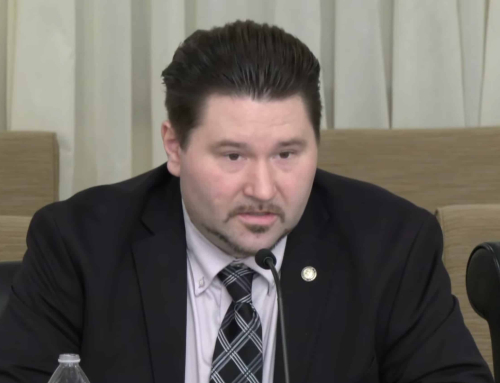
Josh Dixon serves as the Vice President of Litigation at the Center for American Liberty.
The views and opinions expressed in this commentary are those of the author and do not represent an official position of Alpha News.

Josh Dixon
Josh Dixon serves as the Vice President of Litigation at the Center for American Liberty.
Subscribe Below To Our Weekly Newsletter of our Latest Videos and Receive a Discount Code For A FREE eBook from our eBook store: