Minnesota is heading toward a defining election this fall, and the business community cannot afford to misunderstand what is at stake.
Minnesota has seen unprecedented growth in government, an increasingly predatory tax and regulatory environment, declines in nearly every economic metric, and an immense fraud epidemic. This year is not just another political cycle. Business leaders must understand that if the DFL gains another trifecta in state government, it almost certainly will pass even more legislation hostile to private enterprise — and the steady trickle of talent and businesses leaving the state could become a flood tide.
Minnesota’s current political trajectory is being driven by an organized progressive movement with a clear agenda and enormous financial backing. Combined with the strength of U.S. Sen. Amy Klobuchar as the presumptive DFL gubernatorial nominee, the outcome is inevitable — unless private-sector leaders step up in a big way to provide a counterweight.
One of the most dangerous assumptions business leaders still make is that “moderate Democrat” remains a meaningful category. We’ve seen this pattern repeatedly: a Democratic candidate campaigns in the middle, reassures voters and employers, promises pragmatism, and then sprints left once progressive activists and interest groups take the steering wheel.
Look at our very recent history. Tim Walz was elected governor after serving as a so-called moderate Democrat in Congress. Many assumed he would govern as a centrist. Instead, once empowered by a DFL “trifecta,” Walz became one of the most progressive governors in American history, embracing spending increases of nearly 40% in a single legislative session, the most liberal and poorly constructed paid-family-and-medical-leave program in the country, and tax increases of $10 billion despite a $19 billion surplus.
Nationally, in 2020, Joe Biden campaigned on moderation and a “return to normalcy.” But once elected to the presidency, his administration lurched sharply left under pressure from progressive activists.
Klobuchar’s gubernatorial candidacy may lull many into that same false sense of security. She’ll run as the reasonable choice and as the senator who works across the aisle, a profile she has cultivated with great skill. But the real issue is not personality. The real question is: What happens when Klobuchar governs alongside the same hard-left apparatus that already dominates Minnesota politics? What will be her priorities as someone with presidential ambitions in a climate in which Democratic politicians must deliver progressive wins to be credible presidential candidates? And what happens when Klobuchar, who is much smarter and more competent than Walz, sets her mind to a progressive agenda?
If the left obtains a DFL trifecta in 2026, the agenda will be written by woke activists, public-sector unions, and national progressive donors.
Which brings us to the most important truth business leaders and all Minnesotans must confront: DFL dominance over the past 20 years is not organic or grassroots. It is bankrolled. The modern DFL political machine is funded and powered by two enormous forces: public-sector unions (other than those of police and other first responders) and left-wing billionaires, most of whom aren’t Minnesotans.
They are purchasing Minnesota’s elections, massively outbidding the Minnesota-based private employers who did so much to build our state’s prosperity. They have done so while many business leaders hoped someone else would restore balance.
Many Minnesota business leaders have expressed frustration at the many bad candidates the Minnesota Republican Party has in the past put forward (randomly picking candidates from the phone book would have sometimes produced better results) and the limitations of the Republican Party as a whole. I personally often share their frustration. But there is simply no other choice than to invest in standing up against a DFL Party that has lost touch with basic economics and in some cases basic reality.
Minnesota’s private economy is on life support. Despite our state’s historically robust economy, today, Minnesota ranks in the bottom 10 states in nearly every metric. Should the DFL gain another trifecta, it almost certainly would increase the top tax rates for individuals and businesses by 25% or more, potentially making Minnesota the highest-taxed state in the country. It could be expected to pass regulatory provisions even more onerous than the current paid-family-and-medical-leave program. It likely would redistrict the state’s legislative and congressional maps to secure DFL control long-term, and it would avoid taking any meaningful steps to combat fraud.
In the past, a workable balance between the private and public sectors helped create a climate in Minnesota that resulted in our 17 Fortune 500 and world-class agriculture, medical, manufacturing, and family-owned employers across every region.
Under Walz, that healthy balance collapsed. With another DFL trifecta, the situation may become terminal.
In 2026, business leaders face a binary choice: Either invest now, seriously and historically, or accept political and policy irrelevance later. Leaders who create jobs and opportunity must engage to match the scale of the threat they face.
Balance doesn’t happen by accident; it has to be defended. Now is the time for the business community to step up. We cannot remain Minnesota nice while others finish the dismantling of Minnesota’s economy and Minnesota’s future.
Jim Schultz of Plymouth, Minnesota, is the chief executive officer and president of the Minnesota Private Business Council (growthmn.com), a chamber of commerce-like organization for privately held businesses. He wrote this for the News Tribune.
The views and opinions expressed in this commentary are those of the author and do not represent an official position of Alpha News.
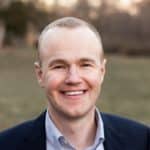
Jim Schultz
Jim Schultz is the President of the Minnesota Private Business Council and was the 2022 Republican nominee for Attorney General.
Subscribe Below To Our Weekly Newsletter of our Latest Videos and Receive a Discount Code For A FREE eBook from our eBook store: