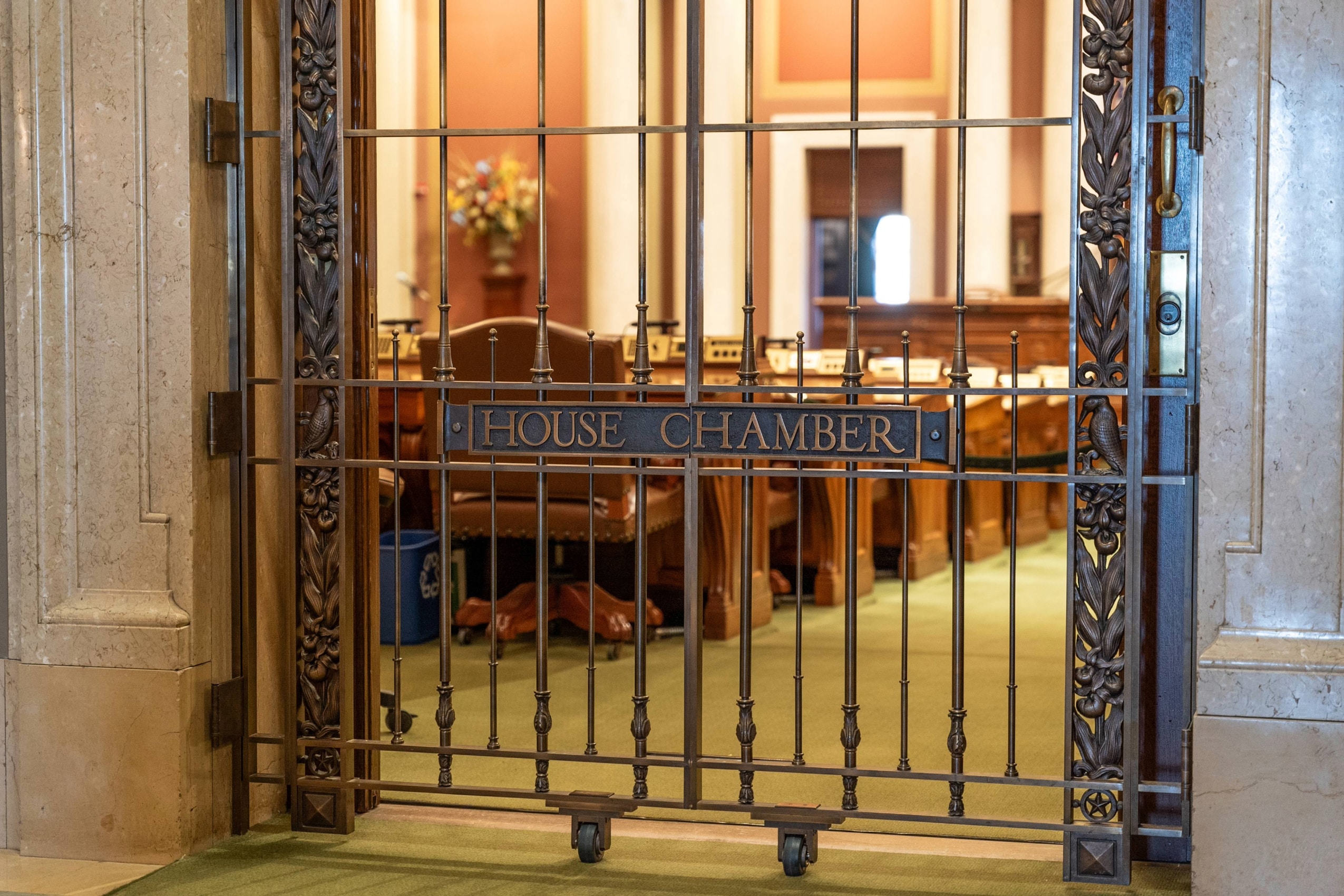
New GOP-sponsored legislation would prevent future ties from occurring in the Minnesota House of Representatives by adding one member to that 134-member legislative body.
For decades, the Minnesota House has been comprised of 134 members. That even number has twice resulted in the House being tied with 67 Republicans and 67 Democrats. The first tie occurred after the 1978 elections, and the second tie exists now.
Both times, the tie resulted in unprecedented political theater. In 1978, both parties came to an agreement which gave Republicans control of the speaker’s chair while DFLers took control of the two most powerful House committees, including the Rules Committee.
That agreement held for several months before a Republican member was found guilty of violating campaign law, the House voted to declare his seat vacant, and the DFL won the special election for that seat. The full details of that story are well worth reading.
In 2024, both parties won 67 seats in the House. However, one Democrat was later found ineligible for his seat. That gave the GOP a 67-66 advantage going into the start of session. In turn, the DFL chose not to show up for session in order to deny the GOP a quorum.
Despite this, the GOP began conducting House business while the DFL walkout went on for weeks. Eventually, the Minnesota Supreme Court ruled that the GOP did not have a quorum and therefore could not legitimately conduct House business without 68 members present.
The two parties later reached an agreement which gave Republicans the speaker’s chair and split the composition of all committees except the Fraud and Oversight Committee. A DFLer was later elected in the one vacant seat which put the House back in a 67-67 tie.
Now, Republican State Rep. Paul Torkelson is offering a bill that would prevent those ties from taking place again. Under HF 4295, the composition of the House would be changed from 134 members to 135 members, thus preventing a future tie.
However, Torkelson’s legislation goes much further than just changing the House. HF 4295 would also decrease the number of senators in the Minnesota Senate from 67 to 45.
In Minnesota, all 67 Senate districts contain two House districts. For example, Senate District 20 contains House District 20A and House District 20B. By increasing the House to 135 members and decreasing the Senate to 45 members, Torkelson’s bill would nest three House seats inside every Senate seat.
While some might be surprised by the reduction in Senate seats, Minnesota actually has the largest state senate in the country. For comparison, the California Senate has 40 members, the Wisconsin Senate has 33 members, and the Texas Senate has 31 members.
Additionally, Torkelson’s bill would not take effect until after the 2030 census has occurred and new legislative districts are drawn.
This means the current composition of the House and Senate would continue through the 2026, 2028, and 2030 elections. When the 2032 elections arrive, voters would elect a new legislature comprised of 45 senators and 135 members of the House.
Torkelson’s bill was heard this week in the House State Government Committee.
Speaking to the committee, Torkelson noted that the House chamber is already outfitted with 135 desks, and Minnesota would save “a considerable amount of money” by removing 22 state senators. State senators receive $51,750 annually plus per diem.
Discussing the bill, DFL State Rep. Ginny Klevorn said she was concerned that shrinking the Senate would result in “dilution of voter representation.” Klevorn said senators would have a “much larger work load” and there would be “less representation per individual.”
Klevorn noted that she did “appreciate” that Torkelson is trying to fix the tie in the House.
Meanwhile, GOP Rep. Jim Nash said he had previously served in the majority, the minority, and now in the tied House. He said the tied House was “more difficult” than serving in either the majority or minority.
Ultimately, HF 4295 was laid over for possible inclusion in a future omnibus bill.
Luke Sprinkel
Luke Sprinkel previously worked as a Legislative Assistant at the Minnesota House of Representatives. He grew up as a Missionary Kid (MK) living in England, Thailand, Tanzania, and the Middle East. Luke graduated from Regent University in 2018.
Subscribe Below To Our Weekly Newsletter of our Latest Videos and Receive a Discount Code For A FREE eBook from our eBook store: