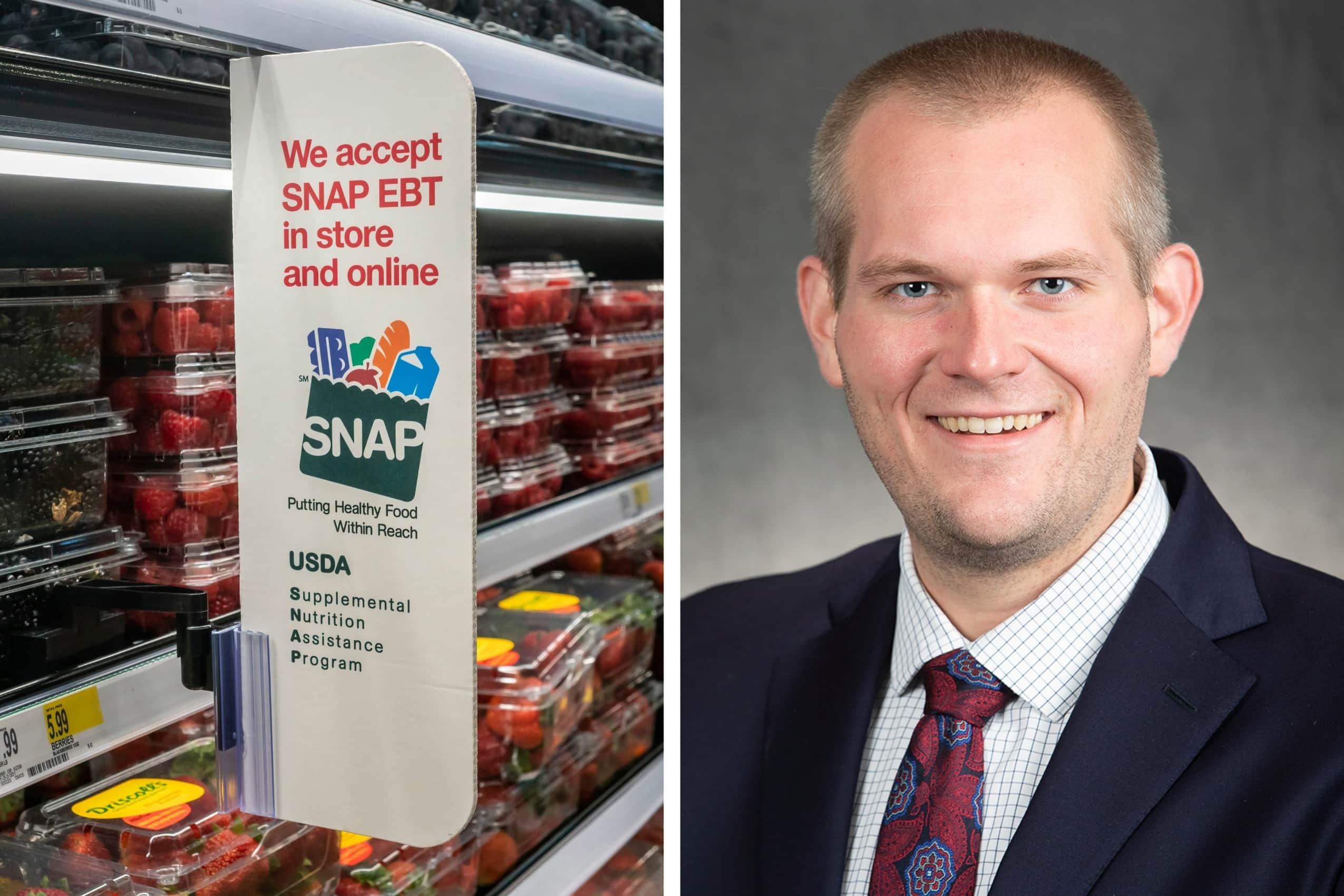
Democrats in the Minnesota House of Representatives blocked legislation that would ban people from using the Supplemental Nutrition Assistance Program (SNAP) to buy candy and soft drinks.
One of the most widely-used welfare programs in the country, SNAP provides low-income individuals and families with monthly funds to purchase food. The program is administered by Minnesota counties but fully funded by the federal government.
On Tuesday, lawmakers in the House Children and Families Committee discussed a slate of bills that would change the SNAP program in Minnesota.
One of those bills was HF 3603, a bill that would require Minnesota’s state government to request a waiver from the federal government which grants Minnesota the authority to ban candy and soda from being eligible for SNAP.
The federal government has approved similar waivers for 22 states. Authored by GOP Rep. Bjorn Olson, HF 3603 would require Minnesota to request that waiver by Jan. 1, 2027.
“The concept of this is that we have a benefit program that is to help individuals with their nutrition, help them with their sustenance,” Olson said. “We’re hoping to ensure that people have a safety net with this, we’re not hoping for them to have a sweet treat.”
Former Republican Rep. Pat Garofalo, now a lobbyist for the Minnesota Grocers Association, testified against the bill, saying grocery stores can already be penalized for violating SNAP guidelines and HF 3603 would subject stores to more potential SNAP violations.
Explaining this, Garofalo said a Kit-Kat is not considered candy under current law because it contains wheat while a similar snack, like a Milky Way bar, is considered candy. In short, Garofalo said a store could get penalized for accidentally mixing up SNAP-eligible items.
Olson answered criticism of his bill, explaining that the grocery stores themselves would not need to determine which food items are eligible or ineligible for SNAP because the computers at checkout would already be imprinted with that data.
The Republican lawmaker emphasized that he is fine with tax dollars being used to help people buy food such as ground beef, bread, lettuce, and other foods. However, he told the committee that he is not OK with tax dollars being used on chocolate and Popsicles.
Olson noted that his bill would not be able to prohibit all candy from being purchased with SNAP due to the complexity of existing law. However, he indicated that banning some sweets was better than banning none.
The Minnesota Retailers Association also opposed HF 3603, saying the bill puts employees “in the position of telling customers what they can and cannot buy. That creates friction at checkout, increases the likelihood of conflict, and places an unfair burden on store staff.”
Meanwhile, Democrats expressed concerns that limiting SNAP eligible foods would cause confusion at grocery stores and deprive diabetics of foods that could help during a sugar low. Multiple DFLers said SNAP recipients are also taxpayers.
“It’s easy to turn [recipients] into the bogeyman instead of asking corporations to pay their fair share, or asking millionaires and billionaires to pay their fair share so that the people who need the help the most can put food on the table for their children,” one DFLer said.
During the committee meeting, Olson explained that banning junk food from SNAP would give Minnesota access to millions in rural healthcare funds under a federal program.
According to Olson, the 22 states who have banned junk food in SNAP will get access to a $12 billion federal fund dedicated to rural healthcare. The GOP lawmaker said failure to act on banning junk food in SNAP would result in Minnesota leaving $200 million on the table.
Despite this, a motion to advance HF 3603 failed in a 7-7 vote; Democrats voted against HF 3603 while Republicans supported it. That bill was laid over for possible inclusion in a future omnibus bill.

Luke Sprinkel
Luke Sprinkel previously worked as a Legislative Assistant at the Minnesota House of Representatives. He grew up as a Missionary Kid (MK) living in England, Thailand, Tanzania, and the Middle East. Luke graduated from Regent University in 2018.
Subscribe Below To Our Weekly Newsletter of our Latest Videos and Receive a Discount Code For A FREE eBook from our eBook store: