A bipartisan group of lawmakers advanced legislation this week that could result in term limits for the Minnesota governor.
When Minnesota achieved statehood in 1858, governors were elected to two-year terms. Starting in 1963, gubernatorial terms were extended to four-year terms. Throughout state history, governors have been allowed to seek reelection an unlimited number of times.
To date, no governor has ever won a third, four-year term. In 1990, DFL Gov. Rudy Perpich tried to win a third term but was defeated by Independent-Republican Arne Carlson. Earlier this year, DFL Gov. Tim Walz abandoned his own bid for a third term.
Now, members of the Minnesota House of Representatives have proposed an amendment to the Minnesota Constitution that would prohibit someone from being elected governor more than twice starting with the 2026 election.
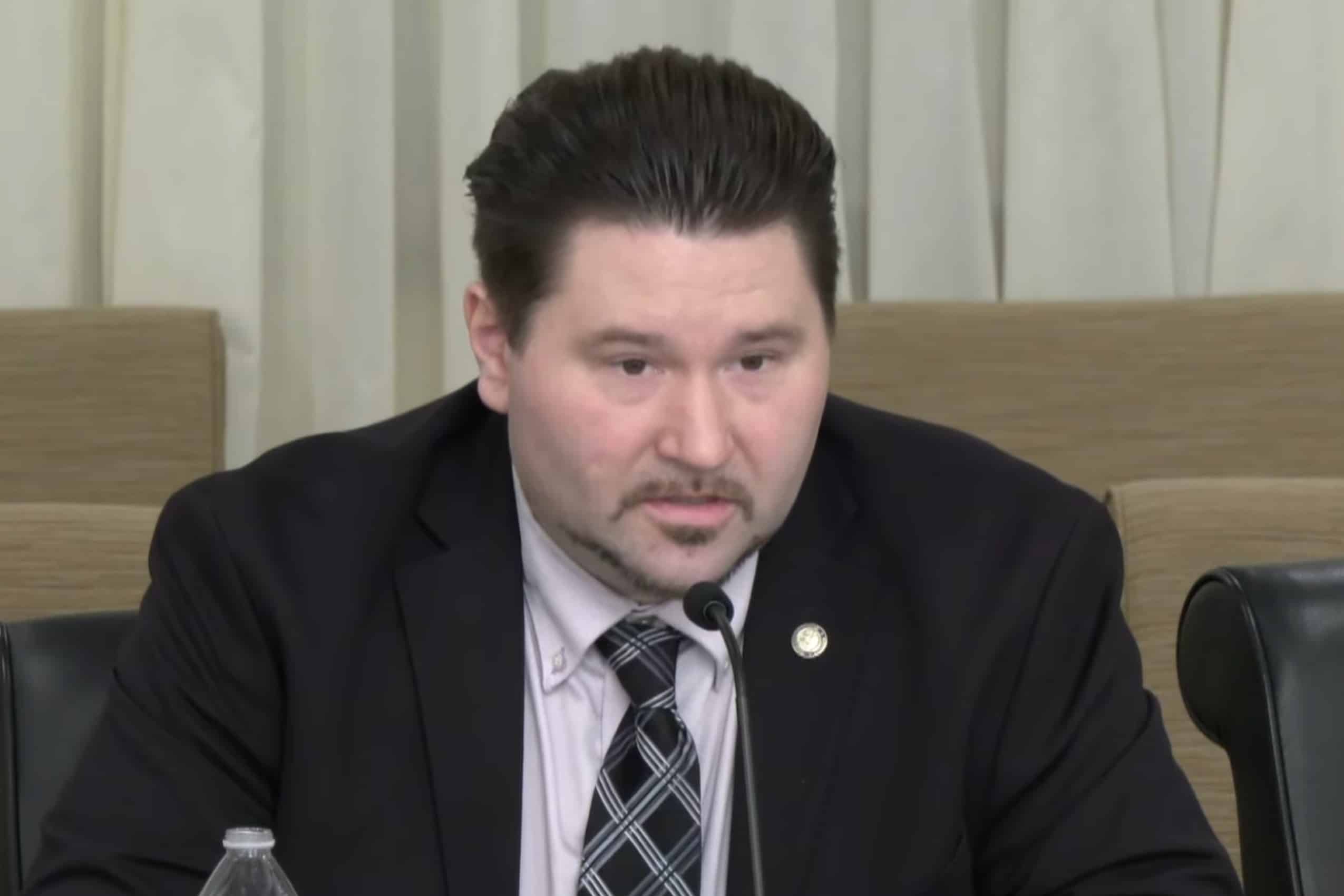
Authored by GOP Rep. Jimmy Gordon, HF 1849 would ask Minnesotans to vote on those gubernatorial term limits during the 2026 general election. Gordon’s proposed amendment would also place identical term limits on the office of lieutenant governor.
Under Minnesota law, amendments to the state constitution must be passed by the House and the Minnesota Senate — the governor’s signature is not required. After being passed by both chambers, the amendment is sent to the voters for approval or rejection.
HF 1849 has 20 Republican co-authors and one DFL co-author, Rep. Bianca Vernig.
On Monday, lawmakers in the House Elections and Government Operations Committee met to discuss HF 1849. Gordon told the committee “now is a great time” to put term limits before the voters because there is currently no incumbent governor seeking reelection.
Republicans were supportive of Gordon’s bill, but Democrats were split. DFL Rep. Emma Greenman, a left-wing member of the state legislature, spoke in favor of gubernatorial term limits and Gordon’s bill.
Noting that term limits were applied to the president of the United States several decades ago, Greenman said, “When we talk about the executive in Minnesota, and nationally, two terms seems to be the coalescing of where the public is at.”
Greenman said HF 1849 “feels like a prudent way to respond to both public opinion” and “what people think about the length of an executive both at the federal and state level.”
Conversely, DFL Rep. Mike Freiberg opposed Gordon’s bill, saying elections already prevent elected officials from overstaying their welcome.
Republican Rep. Drew Roach reminded the committee that Gordon’s bill would not enact term limits outright but would instead “allow the voters to be able to vote on [term limits].”
Notably, the term limits proposed by Gordon’s legislation would not be retroactive, meaning Walz or former two-term GOP Gov. Tim Pawlenty could still run for another two terms because their election victories were prior to 2026.
After discussing HF 1849, lawmakers sent the bill to the House Rules Committee in a voice vote. While there is no record of how someone votes in a voice vote, Greenman and Virnig appeared to vote in favor of advancing HF 1849.
At present, the House is tied with 67 Republicans and 67 Democrats. Meanwhile, the DFL has a one-vote majority in the Senate. As such, any proposed constitutional amendments will need bipartisan support in order to pass through the legislature.

Luke Sprinkel
Luke Sprinkel previously worked as a Legislative Assistant at the Minnesota House of Representatives. He grew up as a Missionary Kid (MK) living in England, Thailand, Tanzania, and the Middle East. Luke graduated from Regent University in 2018.
Subscribe Below To Our Weekly Newsletter of our Latest Videos and Receive a Discount Code For A FREE eBook from our eBook store: